
Virtual Greyhound Betting
 Available in US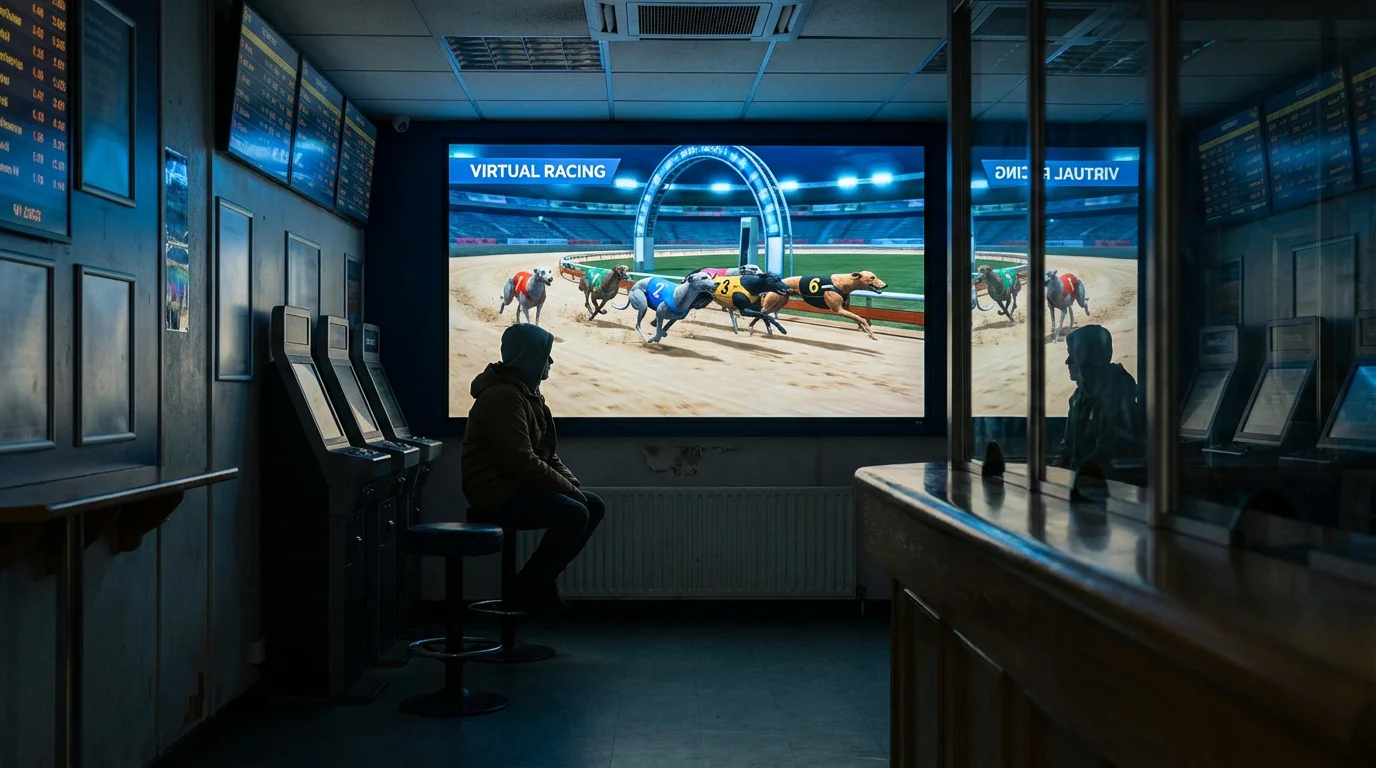
Not Real Dogs, Not Real Form — A Different Product Entirely
Virtual greyhound racing looks like the real thing. The animated dogs burst from traps, chase a lure around a rendered oval track, and cross a finishing line while a commentator calls the action. The odds are displayed in familiar fractional or decimal format. The bet types — win, place, forecast, tricast — mirror what you find on any live greyhound racecard. But underneath the polished graphics, virtual greyhound racing is a fundamentally different product from live dog racing, and understanding that difference is essential before placing a penny on it. Find more betting guides at greyhoundbettingsitesuk.
Virtual greyhound races are generated by a random number generator. There are no real dogs, no real form, no real trainers, and no real track conditions. Every race outcome is determined by software using probability-weighted algorithms, and no amount of racecard analysis, trap draw study, or form reading will give you an edge. The visual presentation is entertainment. The betting market is pure probability, with the bookmaker’s margin built into the odds structure. If you approach virtual greyhounds expecting the same analytical opportunities as live racing, you will be disappointed. If you approach them as a fast-paced betting product with entertainment value and accept the odds for what they are, they have a legitimate place in the landscape.
How Virtual Greyhound Racing Works
RNG and Race Generation
Every virtual greyhound race is powered by a random number generator — the same core technology used in online casino games, video slots, and other digital gambling products. The RNG determines the finishing order of the race before the animation even begins. The visual representation you see on screen — the dogs running, jostling, overtaking — is a post-hoc animation layered over a pre-determined result. The dogs do not race in real time. The outcome is already set.
The probability assigned to each dog in a virtual race is encoded in the odds. If a virtual dog is priced at 2/1, it has been assigned approximately a 33 percent probability of winning within the RNG model. The total overround — the sum of all implied probabilities across the field — determines the bookmaker’s margin, which is typically higher in virtual racing than in live greyhound markets. Where live greyhound racing might carry an overround of 115 to 125 percent, virtual greyhound markets commonly run at 130 to 140 percent or above. That higher margin means the long-run return to the bettor is lower.
Races are generated and run continuously, typically every two to three minutes. There is no racecard, no form guide, and no external data to analyse. Each race is an independent event with no memory of previous outcomes. A dog that won the last three virtual races at the same odds has no greater or lesser chance of winning the next one. Streaks are statistical noise, not evidence of form.
Virtual Race Providers
The major virtual racing provider in the UK market is Inspired Entertainment, whose products power the virtual greyhound sections of William Hill, Betfred, Coral, Ladbrokes, and several other operators. Inspired’s races feature high-quality 3D animation, realistic commentary, and fictional track names — Wooferhampton and Selhurst Bark being among the more creative examples. The visual quality is good enough to watch casually, and the commentary adds atmosphere even though it is describing a pre-determined outcome.
Different bookmakers may offer different virtual greyhound products from different providers, which means the odds structures, race frequencies, and visual presentations can vary between operators. bet365, for example, runs its own virtual racing product with a slightly different look and feel from Inspired’s standard offering. The underlying RNG principle is the same across all providers, but the specific odds margins and payout structures may differ.
Betting Markets on Virtual Greyhounds
The betting markets available on virtual greyhound racing mirror those available on live races, though with some limitations. Win and place bets are always available. Forecast bets (predicting first and second in exact or any order) are offered on most virtual greyhound products. Tricast bets (first, second, and third in exact order) are available at the majority of operators. Each-way betting follows the same quarter-odds, two-places structure as live six-dog racing.
What is absent is any meaningful basis for selection beyond the displayed odds. In live greyhound racing, you choose your bet based on form, trap draw, running style, and race conditions. In virtual racing, the odds are the only information available. A 3/1 shot is a 3/1 shot because the algorithm has been assigned that probability. You cannot outperform the odds through analysis because there is nothing to analyse. The market is the product.
Fixed-odds forecasts and tricasts on virtual racing pay according to a pre-set odds table rather than a post-race computer dividend. This differs from live racing, where the CSF and CT are calculated after the event. The fixed-odds tables for virtual forecasts and tricasts tend to carry a higher margin than the equivalent computer dividends on live racing, which is another factor that reduces the long-term return for virtual greyhound bettors.
Some punters use virtual greyhound racing as a way to practise bet types — getting comfortable with forecast and tricast mechanics, understanding each-way returns, and learning how the bet slip works — before applying those skills to live racing. This is a reasonable use of the product, provided the stakes are kept low and the practice is treated as a learning exercise rather than a profit-seeking activity.
Key Differences from Live Greyhound Racing
The most important distinction between virtual and live greyhound racing is the absence of skill-based edges in virtual betting. In live racing, form analysis, trap draw assessment, track knowledge, and odds comparison create genuine opportunities for informed bettors to outperform the market over time. None of these edges exist in virtual racing. The RNG ensures that every race is an independent, probability-governed event with no external data to exploit.
Best odds guaranteed does not apply to virtual greyhound racing at any UK bookmaker. There is no starting price mechanism in virtual racing — the odds are fixed at the point of bet placement and do not move. This removes one of the most valuable tools available to live greyhound bettors and further reduces the return potential of virtual betting.
The pace of virtual racing is also fundamentally different. Live greyhound meetings run over two to three hours with races every twelve to fifteen minutes, giving bettors time to analyse each race, check the racecard, and make considered selections. Virtual races run every two to three minutes, continuously, with no breaks for form study because there is no form to study. This rapid-fire format can encourage impulsive betting and makes it easy to accumulate significant losses in a short period without the natural pause that live racing provides.
On the entertainment side, virtual greyhound racing has genuine appeal for bettors who enjoy the race-watching experience but want action outside normal live racing hours. Virtual races run 24 hours a day, which means there is always something available when BAGS and evening meetings are not running. The animation quality has improved significantly over recent years, and the commentary adds a layer of engagement that pure RNG number games lack. As a supplement to live racing, virtual greyhounds fill a gap. As a replacement, they fall short.
The Screen Race — Knowing What You Are Betting On
Virtual greyhound racing is not trying to be live greyhound racing, and bettors should not treat it as such. It is a fast-turnover, entertainment-focused betting product that uses the familiar aesthetics of dog racing as a visual wrapper around a probability engine. There is nothing inherently wrong with that, provided you go in with clear expectations.
If you bet on virtual greyhounds, keep stakes small, treat it as entertainment rather than investment, and resist the urge to chase losses across rapid-fire races. The bookmaker’s margin is higher than on live racing, the edges available to skilled bettors are zero, and the pace of the product is designed to encourage volume. Discipline matters more in virtual racing than in any other greyhound betting market, precisely because the product offers no analytical footholds to slow you down. Also read our greyhound exchange betting.
For bettors who want to develop their skills and grow their bankroll, live greyhound racing remains the product that rewards effort. Virtual racing is a sideshow — visually polished, constantly available, and structurally stacked in the bookmaker’s favour. Know the difference, and allocate your time and money accordingly.
