
How Weather Affects Greyhound Racing
 Available in US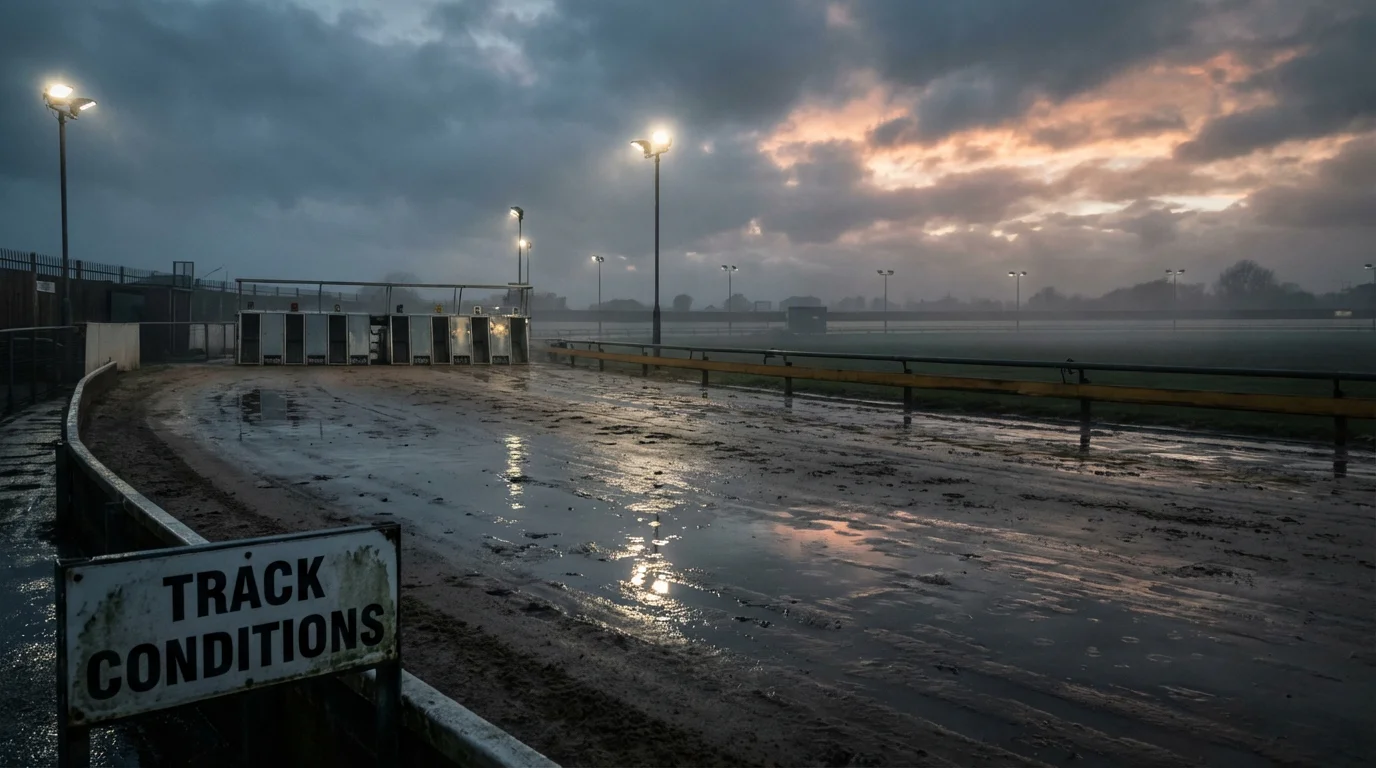
The Sand Changes Everything
Greyhound racing takes place on sand, and sand is not a constant surface. Rain saturates it, heat bakes it, frost hardens it, and regular racing churns it. Each variation changes the track’s speed, the grip available to the dogs, and the dynamics of how a race unfolds. A dog that dominates on a fast, firm surface may struggle when the same track is heavy after a downpour. A closer that needs time to build momentum might find the slower surface gives it exactly the extra seconds it needs to reel in a front-runner. Get more race analysis at greyhoundbettingsitesuk.
Track conditions are one of the most underused factors in greyhound betting. Most punters assess form without reference to the conditions under which that form was produced. They see a dog’s best time and assume it can replicate that figure tonight, regardless of whether the track is running two seconds slower due to morning rain. Factoring conditions into your analysis does not require specialist knowledge. It requires awareness, a check of the weather forecast, and an understanding of how wet and dry surfaces affect different types of runner.
How Sand Tracks Behave in Wet and Dry Conditions
A dry, well-maintained sand track is the default fast surface in UK greyhound racing. The sand is firm underfoot, provides consistent grip through the bends, and allows dogs to hit their top speed without excessive effort. Times recorded on dry tracks represent the performance ceiling for most dogs — their fastest runs will almost always be on a fast surface. Summer evening meetings on tracks that have not seen rain for several days typically produce the quickest times of the calendar.
When rain arrives, the sand absorbs water and becomes heavier. The surface softens, the grip changes, and the track slows. Light rain has a modest effect — perhaps adding half a second to overall times. Heavy, sustained rain can transform the surface into something approaching deep going, adding a full second or more to race times and fundamentally altering the competitive dynamic. Dogs must work harder to maintain their stride, which penalises smaller, lighter runners disproportionately and rewards dogs with greater physical strength and stamina.
The distribution of moisture across the track is not uniform. The inside running rail sees more traffic — dogs naturally gravitate toward it, particularly railers seeded in Traps 1 and 2 — and this concentrated use churns the wet sand into a heavier, less consistent surface. The outside of the track, seeing less footfall, often retains a firmer, faster surface even in wet conditions. This is one of the mechanisms by which rain can shift trap bias, moving the advantage from inside traps to outside traps as the evening progresses.
Frost and cold temperatures create a different set of conditions. Frozen sand is hard and fast on the surface but can become slippery, particularly through bends where dogs need lateral grip. Very cold evenings can produce unexpectedly quick times on a hard surface, but the injury risk increases, and racing managers may choose to water the track to soften it, which reintroduces the wet-track dynamics described above.
Impact on Running Styles and Trap Bias
The effect of conditions on running styles is consistent enough to be predictable. Front-runners — dogs that lead from the first bend and attempt to maintain their advantage — tend to perform relatively better on fast, dry tracks. The firm surface allows them to maintain their early speed advantage through the bends without the physical toll of running through heavy going. On a fast track, the gap between a front-runner and its pursuers tends to hold or widen.
On a wet, heavy track, front-runners tire more quickly. The effort required to maintain pace through saturated sand is greater, and dogs that lead into the straight may find their reserves depleted when a closer begins to challenge. Strong finishers — dogs whose form remarks frequently show RnOn (ran on) or Fin (finished well) — gain a relative advantage in wet conditions because the front-runners come back to them.
Trap bias shifts are the most directly actionable consequence of weather changes for bettors. On a dry evening, inside traps at a tight track like Romford hold their structural advantage because the inside rail provides a consistent running line on firm ground. On a wet evening at the same track, the inside rail may become the slowest strip of sand on the circuit, degraded by the accumulated footfall of earlier races. By the fifth or sixth race of the meeting, that inside strip can be noticeably softer and looser than the ground further out, penalising any dog that runs on it.
This gradual deterioration of the inside surface is why bettors who watch the early races on a wet card and adjust their trap bias assessment for the later races hold an edge. If Trap 1 winners dominate the first three races on a dry track, that bias is likely to persist. If Trap 1 runners are struggling in the early races on a wet track while wider-drawn dogs are performing well, the conditions are favouring the outside, and your later selections should reflect that.
Checking and Factoring Conditions Before You Bet
Assessing track conditions before placing your bets does not require access to insider information. It requires three things: a weather forecast, awareness of the track’s recent racing schedule, and observation of the early results on the card.
Check the weather forecast for the track’s location on the day of the meeting. This sounds obvious, but many bettors skip this step entirely. If the forecast shows rain during the afternoon and the evening meeting starts at 7 PM, the track will be running wet from the first race. If the rain stopped at noon and the sand has had seven hours to drain, conditions may be closer to good than heavy. The timing of rainfall relative to the meeting matters as much as the total amount.
Consider the track’s recent schedule. A track that has raced three times in the past five days will have a more worn surface than one that has been resting. Combined with wet weather, a heavily raced track can produce conditions that are significantly slower than the same venue with a fresh, rested surface. Tracks that run both afternoon and evening fixtures on the same day — double meetings — are particularly prone to surface deterioration by the evening card.
Use the early races as live data. If the first two or three races produce times that are a second or more slower than recent averages at the same grade and distance, the track is running slow. Adjust your expectations for the remaining races accordingly. If inside-drawn dogs are underperforming in those early races despite having the form to win, the surface is likely compromised on the inside rail. This real-time observation is more reliable than any pre-meeting prediction because it reflects the actual state of the track rather than a forecast.
Bookmaker odds typically do not fully account for conditions. The early market is priced primarily on form figures and grade, with minimal adjustment for surface conditions. This is where informed bettors find value: by recognising that a front-runner’s form was achieved on a fast track and tonight’s track is heavy, or that a closer who has been underperforming has simply been running on surfaces that do not suit its style. The adjustment is simple, the data is available, and the market consistently under-prices it.
Racing in All Weathers — The Conditions Edge
Greyhound racing runs through every season and in virtually every weather condition short of the most extreme frost or flooding. That year-round schedule means track conditions are never a stable variable — they change from week to week, meeting to meeting, and sometimes race to race as the sand is affected by weather and traffic during the card. Also read our distances and race types.
The bettors who profit from conditions do not have access to meteorological instruments or private track reports. They do the same things any observer can do: check the weather, watch the early races, notice when inside traps stop winning, and adjust. The edge is not in the information — it is publicly available to everyone watching — but in the discipline to use it consistently rather than ignoring it in favour of form figures alone.
