
How to Bet on Greyhound Racing — Complete UK Beginner Guide
 Available in US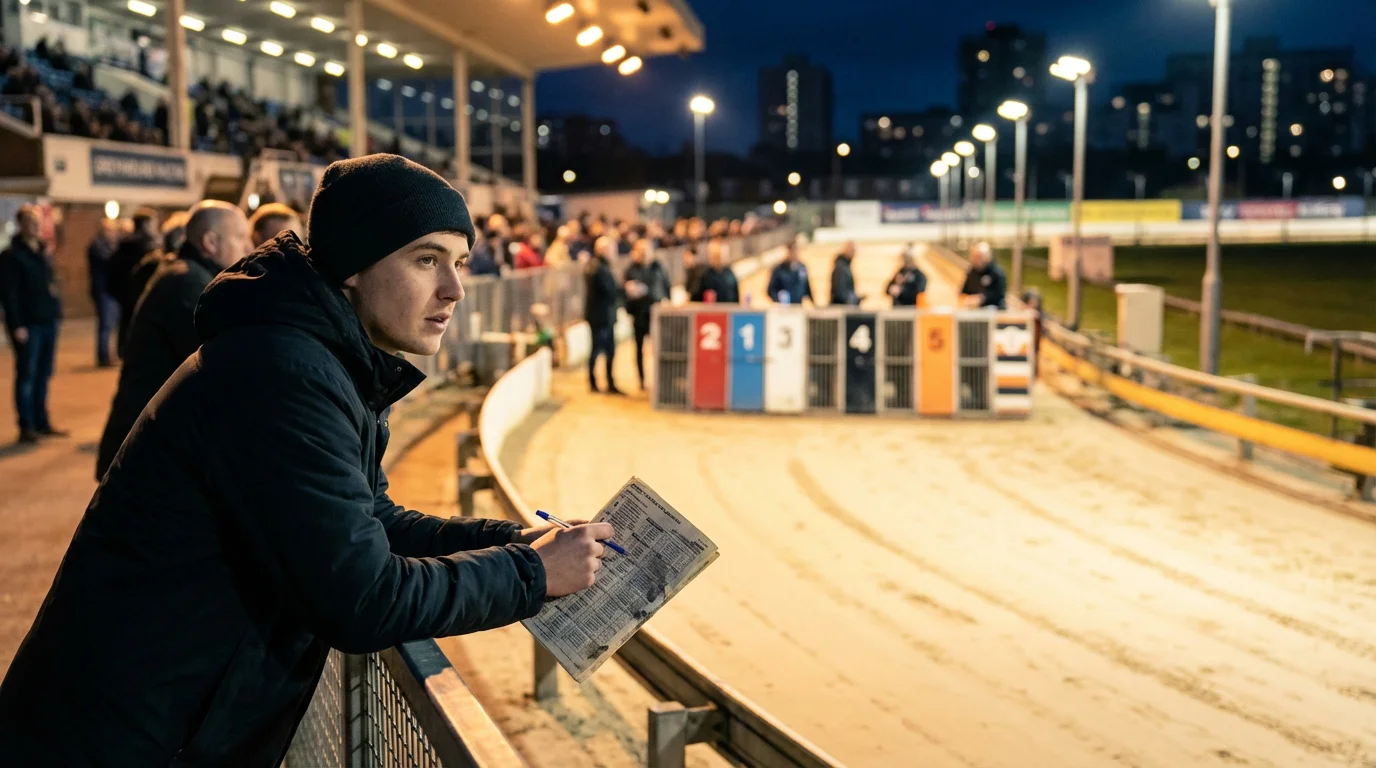
From Traps to Payout — Your First Greyhound Bet
Six dogs. A mechanical hare. Thirty seconds of flat-out chaos on a sand track. Greyhound racing strips competitive sport down to something almost uncomfortably simple — and that simplicity is exactly what makes it compelling for bettors. There are no jockeys making tactical decisions mid-race, no half-time team talks, no substitutions from the bench. Once those traps fly open, every variable that matters has already been set. The dog’s form, the trap draw, the track conditions, the running style — all of it is baked in before the hare even starts moving. Find more betting guides at greyhoundbettingsitesuk.
For anyone used to betting on football or horse racing, the greyhound world feels different from the first click. Races happen every fifteen minutes across nineteen GBGB-licensed tracks in the UK, which means opportunities come fast and thick from morning until night. The fields are smaller — six dogs instead of twelve or sixteen — and the markets reflect that tighter structure. Odds shift rapidly in the final minutes before a race, sometimes dramatically, because the pools are thinner and the information asymmetry is sharper. A late withdrawal, a rumour about a dog’s trial time, a sudden change in going — any of it can move a price by several points.
This guide is built for someone placing their first greyhound bet, but it doesn’t talk down to you. We’ll walk through every step: choosing the right bookmaker, reading a racecard, understanding the bet types, and making sense of odds that behave differently to anything you’ve seen in mainstream sports. Greyhound markets don’t wait for you. By the time you’ve finished this piece, you won’t need them to.
Setting Up — What You Need Before Your First Bet
Choosing a Bookmaker for Greyhound Racing
Not every bookmaker treats greyhound racing with the same seriousness. Some of the biggest names in UK betting offer a full greyhound product — live streaming, trap challenge markets, best odds guaranteed, dedicated racecards — while others barely go beyond a basic win market with starting price odds. The difference matters more than you might expect.
When you’re choosing where to bet on the dogs, look beyond the welcome offer. The key features that separate a genuine greyhound bookmaker from one that’s tacked the sport on as an afterthought include: live streaming of UK and Irish races, best odds guaranteed (BOG) on greyhound markets, a range of bet types beyond simple win and place, and a mobile experience that doesn’t fall apart when you’re trying to place a bet ninety seconds before the off. Bookmakers like bet365, Betfred and Coral have invested in greyhound-specific products — dedicated sections with form data, Timeform ratings, and early prices available from around ten minutes before each race. Don’t just pick the bookie with the biggest football ad. A great football bookmaker is not automatically a great greyhound bookmaker, and the gap between them is wider than most punters realise.
Account Registration and Verification
Opening a UK betting account follows a standard process, but it’s worth knowing what to expect so you’re not caught out when a race is about to go off. You’ll need to be eighteen or over and will be asked for your full name, date of birth, address and contact details. Under Gambling Commission rules, the bookmaker must verify your identity before you can withdraw winnings — and some now require verification before you can even place a bet. Have a form of photo ID ready: a passport or driving licence will do it, sometimes supplemented by a recent utility bill for proof of address.
Deposits can be made by debit card, bank transfer, e-wallets like PayPal or Skrill, or prepaid cards. Credit cards have been banned for gambling transactions in the UK since April 2020, so that’s not an option. Minimum deposits typically sit between one and five pounds depending on the bookmaker and payment method. Once you’re verified and funded, you’re ready to find a race — and that’s where things get interesting.
Placing Your First Greyhound Bet — Step by Step
Finding a Race and Reading the Racecard
Log into your bookmaker account and navigate to the greyhound racing section. On most sites, this is listed under “Greyhound Racing” or simply “Dogs” in the main sports menu. You’ll see a list of meetings — each one named after a track (Romford, Nottingham, Monmore, Crayford, and so on) with race times listed alongside. Daytime meetings are typically BAGS fixtures, which run from late morning through the afternoon and are primarily televised for the betting market. Evening meetings tend to draw larger crowds and often carry stronger competition.
Click into a race and you’ll see the racecard. This is your pre-race briefing, and it contains everything you need to make an informed decision. Each dog is listed with its trap number (1 through 6), the trap colour (red, blue, white, black, orange, striped), the dog’s name, its trainer, recent form figures and a best time at the given distance. The form figures read left to right, most recent run last: a sequence like 3-1-1-4-2-1 tells you the dog has been finishing consistently near the front, with a win in its last start. You’ll also see race remarks — coded shorthand that describes how each previous run played out. These abbreviations (QAw for “quick away”, Bmp for “bumped”, RnOn for “ran on”) contain genuine insight if you know what they mean, and we’ll dig into the most important ones later in this guide.
The racecard also shows the race grade, distance and start time. Take note of the grade — it tells you the quality of the field and, by extension, how competitive and predictable the race is likely to be.
Selecting a Market and Confirming the Bet
Once you’ve picked your dog, it’s time to choose your market. The most straightforward option for a first bet is a simple win bet: you’re backing your selection to finish first. Tap or click the odds next to your chosen dog, and the selection will appear on your betslip. You’ll see the current price displayed — this might be a fixed early price or “SP” (starting price), which means the odds won’t be set until moments before the race begins.
Enter your stake. The minimum is usually as low as ten pence for online bets, though a pound or two is a more typical starting point. Your betslip will show the potential return based on the current odds. If the bookmaker offers best odds guaranteed on greyhounds, you’ll get whichever is higher — the price you took or the SP. This is worth checking before you confirm, because greyhound odds can shift significantly in the final minutes.
Review your betslip: correct dog, correct race, correct stake. Then confirm. One important timing note — bets cannot be placed once the traps open. With greyhound racing, the window between “final declarations” and the off is narrow. If you’re placing a bet two minutes before the scheduled start time, don’t dawdle. The race won’t wait, and neither will the market.
The Bet Types Every Beginner Should Know
Win Bets and Place Bets
Start with a win bet. Everything else builds from there. A win bet is the purest wager in greyhound racing: pick the dog that crosses the line first, and you get paid. If it finishes second, third or anywhere else, you lose your stake. No complications, no conditions.
A place bet broadens the target. In a standard six-dog greyhound race, a place bet pays out if your dog finishes first or second. The odds are lower — typically around a quarter of the win price — because the probability of landing in the top two is obviously higher than winning outright. Place bets suit situations where you fancy a dog’s chances of running well but aren’t confident enough to back it for the win. They’re also useful for higher-priced dogs where even the reduced place odds return a worthwhile payout.
Each Way Bets Explained
An each way bet is two bets in one, and this is where some beginners get caught out on their first attempt. When you place a one-pound each way bet, you’re actually staking two pounds: one pound on the dog to win and one pound on the dog to place. If the dog wins, both bets pay out. If the dog finishes second (in a six-runner field), only the place part pays, at a fraction of the win odds — usually one quarter.
Here’s a practical example. You back a dog at 6/1 for one pound each way. Total stake: two pounds. If it wins, you collect six pounds profit from the win part plus one pound and fifty pence from the place part (6/1 at quarter odds = 6/4, so 1.50 profit), plus your two-pound stake back. If it finishes second, you lose the win part but collect one pound fifty from the place, minus the one-pound place stake — so fifty pence net profit. If it finishes third or worse, you lose the full two pounds.
Each way betting offers genuine value in the right circumstances. The sweet spot is mid-priced dogs — around 4/1 to 8/1. At shorter prices, the place return is negligible relative to stake. At very long odds, the increased risk means you’re more likely to lose both parts. The key is to think of each way not as a safety net but as a separate economic proposition: does the place part, on its own terms, represent good value?
Forecast and Tricast Bets
Forecast and tricast bets ask you to predict the exact finishing order — and when you get them right, the payouts reflect just how hard that is. A straight forecast requires you to name the first and second-place finishers in the correct order. You’re not just finding a winner; you’re calling two positions in a six-dog field, which is a significantly harder proposition than a simple win bet.
The payout on a successful forecast is calculated as a computer straight forecast (CSF) dividend, determined after the race based on the actual starting prices and finishing positions. This means you don’t know your exact return when you place the bet — unlike a fixed-odds win bet — but CSF dividends often substantially exceed what a simple accumulation of win odds would suggest. A reverse forecast covers the same two dogs but in either order, effectively doubling your stake for a lower but more achievable payout.
A tricast takes it further: you need to name the first, second and third finishers in exact order. In a six-dog field, there are 120 possible finishing combinations for the top three, so you’re swimming against serious arithmetic. When a tricast lands, though, the returns can be substantial — computer tricast dividends regularly reach into the hundreds from a modest stake. Combination tricasts let you select three or more dogs and cover every permutation, but the number of bets (and total stake) escalates quickly. Three dogs in a combination tricast gives you six bets; four dogs gives you twenty-four. It’s a calculated gamble, and the calculation should happen before you click confirm.
Understanding Greyhound Racing Odds
Greyhound racing odds in the UK are predominantly displayed in fractional format — 5/1, 11/4, 7/2 — though most bookmaker sites let you switch to decimal if you prefer. Fractional odds tell you the profit relative to your stake: 5/1 means five pounds profit for every one pound staked, returning six pounds in total. Decimal odds express the total return including stake: the same 5/1 becomes 6.00 in decimal. For single bets the format barely matters, but if you’re building accumulators or calculating combination stakes, decimal is arithmetically simpler.
Where greyhound odds diverge from other sports is in their volatility. A football match has been priced up for days before kick-off, with thousands of opinions feeding into stable odds. Greyhound odds, by contrast, often only appear around ten to fifteen minutes before the race. The markets are thinner, fewer bettors are involved, and prices can shift sharply on relatively small amounts of money. A dog might open at 5/1 and be backed down to 3/1 within minutes — or drift from 4/1 to 7/1 if early support goes elsewhere.
Starting price is the final set of odds determined just before the race goes off, and it’s the default if you haven’t locked in a fixed price. Because greyhound SPs can differ significantly from early prices, the concept of best odds guaranteed becomes critical. With BOG, you take an early price and the bookmaker guarantees that if the SP turns out higher, you’ll be paid at the better number. It removes the timing gamble entirely, and any bookmaker that offers BOG on greyhounds should be at the top of your list. If you can do basic multiplication, you can calculate your payout. If you can use BOG, you won’t need to worry about whether you timed the market right.
What Actually Decides a Greyhound Race?
Trap Draw and First-Bend Advantage
The first bend decides most greyhound races — everything before it is setup, everything after is largely a consequence. Greyhound tracks are oval, and the run from the traps to the first bend is where the race takes shape. A dog that leads into the first bend has a clear run on the rail and avoids the bumping, checking and crowding that can derail a challenge from behind. Statistical analyses of UK races consistently show that dogs leading at the first bend win at a significantly higher rate than those who don’t.
This is where the trap draw becomes important. Dogs are seeded into traps based on their running style. A railer — a dog that naturally runs close to the inside rail — will typically be drawn in traps 1 or 2. A wide runner gets traps 5 or 6. Middle-seed dogs land in 3 or 4. The seeding isn’t arbitrary; racing managers allocate traps to minimise interference and produce competitive races. But it also creates patterns. At certain tracks, specific traps have a measurable advantage due to the geometry of the run to the first bend. Trap 1 at a tight track with a short run-up might dominate because the railer gets to the bend first with the shortest path. At wider tracks, trap 6 can be advantageous because a fast wide runner avoids early congestion entirely.
Distance, Grade and Running Style
UK greyhound races are categorised by distance: sprints (typically around 260 metres), standard middle-distance (460-480m, the bread-and-butter trip), stayers (630-690m) and marathons (840m+). The distance matters because different dogs have different speed profiles. Some are explosive out of the traps but fade over longer trips; others are slow to find their stride but power through the final hundred metres. Matching a dog’s running style to the race distance is one of the most basic — and most overlooked — elements of form analysis.
The grading system adds another layer. Dogs are graded from A1 (the fastest) through to A11, with separate letter codes for different distances (D for sprint, S for stayers). A dog’s grade reflects its measured ability over that distance at its home track, and races are assembled from dogs of the same grade to keep fields competitive. Understanding the grade tells you the calibre of the race: an A1 contest features the quickest dogs at the track, while an A8 race will be slower but potentially more unpredictable.
Track Conditions and Race-Day Variables
Greyhound tracks in the UK use sand surfaces, and conditions change with the weather. Wet sand generally plays faster than dry sand — the surface firms up, allowing dogs to grip better and maintain speed through the bends. But wet weather doesn’t affect all traps equally. Rain can exaggerate inside-rail advantage at some tracks while opening up the outside at others, depending on drainage, track geometry and how the sand settles. Some dogs handle wet conditions better than others, and this information is often captured in race remarks — look for comments about a dog’s performance on different surfaces in its form history.
Time of day matters too. BAGS meetings in the afternoon are broadcast for the betting market and tend to feature weaker cards with less competitive fields. Evening meetings — particularly at tracks like Romford, Nottingham and Monmore — are often stronger, with better-graded dogs and more informed money in the market. None of this guarantees outcomes, but it shapes how you should approach each card. A casual punt on a Wednesday afternoon BAGS meeting is a different exercise from studying form on a Saturday evening card at a Category One track.
Five Mistakes New Greyhound Bettors Make
Favourites win about a third of the time in UK graded greyhound races — that’s a lot of losing, and yet backing the favourite is the default for most newcomers. A thirty-five percent strike rate sounds respectable until you consider the prices. A dog sent off at even money needs to win fifty percent of the time to break even. At 4/6, it needs to win sixty percent. Most greyhound favourites are priced between those ranges, which means you’re systematically overpaying for reliability. The fix isn’t to ignore favourites entirely — it’s to assess whether the price reflects the actual probability, not just the name at the top of the market.
The second mistake is ignoring the trap draw. You wouldn’t bet on a horse without checking the going; you shouldn’t bet on a greyhound without knowing whether its trap suits its running style and the track layout. A fast railer drawn wide is fighting geometry. A slow beginner drawn on the inside at a track with a short run to the first bend is likely to get crowded out before reaching the straight.
Third: betting without checking form. The racecard is right there on the screen, and most punters scroll past it. Recent form figures, best times, race remarks — even a thirty-second scan will tell you whether a dog has been competitive or declining. A dog that has finished 5-6-4-5 in its last four starts is not about to win at 3/1 because the name sounds fast.
Fourth, and this is the one that does real damage: chasing losses. Greyhound racing runs on a fifteen-minute cycle. There’s always another race, always another card, always another “this one looks good” selection to chase the money you lost twenty minutes ago. It’s the most structurally dangerous feature of the sport for a bettor. If you’ve had three losers in a row, the next race isn’t your opportunity to recover — it’s another independent event that doesn’t care about your running total.
Fifth: using a bookmaker that has no greyhound-specific features. If your bookie doesn’t offer live streaming, BOG, or anything beyond win and place markets, you’re giving yourself a handicap before the traps even open. The right tools don’t guarantee profit, but the wrong tools make informed betting significantly harder.
Bankroll Basics for Greyhound Punters
Greyhound racing offers more betting opportunities in a single afternoon than most sports provide in a week. Two hundred or more races run daily across UK tracks, from morning BAGS meetings to evening cards, and every single one of them is available to bet on from your phone. That volume is the sport’s biggest appeal and its biggest risk. Nobody should be betting on all of them, and treating each race as an opportunity is a reliable path to an empty account. Discipline in greyhound betting isn’t about picking winners — it’s about deciding which races to leave alone.
The simplest staking approach for beginners is level stakes — the same fixed amount on every bet, regardless of how confident you feel. One percent of your total bankroll per bet is a common starting point. If you’ve set aside a hundred pounds for greyhound betting, that’s a one-pound stake per selection. It sounds conservative, and it is. That’s the point. Level stakes remove the emotional scaling that leads to chasing and overbetting: the four-pound “sure thing” to recover the three one-pound losers you’ve just had.
An alternative is percentage-of-bankroll staking, where you bet a fixed percentage of your current balance rather than a fixed pound amount. This naturally scales your stakes down as you lose and up as you win, providing a form of automatic risk management. The distinction between the two methods matters less than the principle behind both: have a system, and stick to it.
Set session limits before you start. Decide in advance how many races you’ll bet on, how much you’re willing to lose in a session, and at what point you’ll walk away. A bad card is a bad card — there’s no law of averages that says the seventh race will compensate for the first six. When the limit hits, close the app. The dogs will still be running tomorrow.
The First Bend — Where Your Betting Journey Turns
In greyhound racing, the first bend is where chaos becomes order. Six dogs burst from the traps in a wall of muscle and noise, and for a few strides nobody knows what’s happening. Then they hit the bend, and the race takes shape. Someone leads, someone gets crowded, someone finds space on the outside. The disorder resolves into something legible, and from that point on, you can see how it’s going to play out.
Betting on greyhounds works the same way. Your first few bets will feel messy. You’ll back the wrong dog for the wrong reasons, misread a racecard, miss a detail about the trap draw, or stake too much on a race you shouldn’t have touched. That’s normal. It’s not a sign that greyhound betting isn’t for you — it’s a sign that you haven’t hit the first bend yet.
The punters who get good at this sport are the ones who treat their early bets as learning investments, not profit opportunities. Start with small stakes. Focus on one or two meetings rather than trying to cover every card. Watch the races — streaming is available on most major bookmaker sites — and pay attention to what actually happens on the track versus what the form suggested. Notice how trap bias plays out at different venues. See how rain changes the running. Watch a 6/1 shot get bumped at the first bend and finish fourth when it should have won. Also read our greyhound bet types explained.
Your first greyhound bet probably won’t win. That’s not the point. The point is to place it with a reason, learn from the result, and come back with a sharper eye for the next one. Greyhound racing is a sport that rewards specificity — the right dog, at the right track, in the right conditions, at the right price. The more cards you study, the faster those judgments become. And once you’re past that first bend, the race ahead looks very different.
