
Greyhound Racing Odds Explained — SP, BOG & Value Betting
 Available in US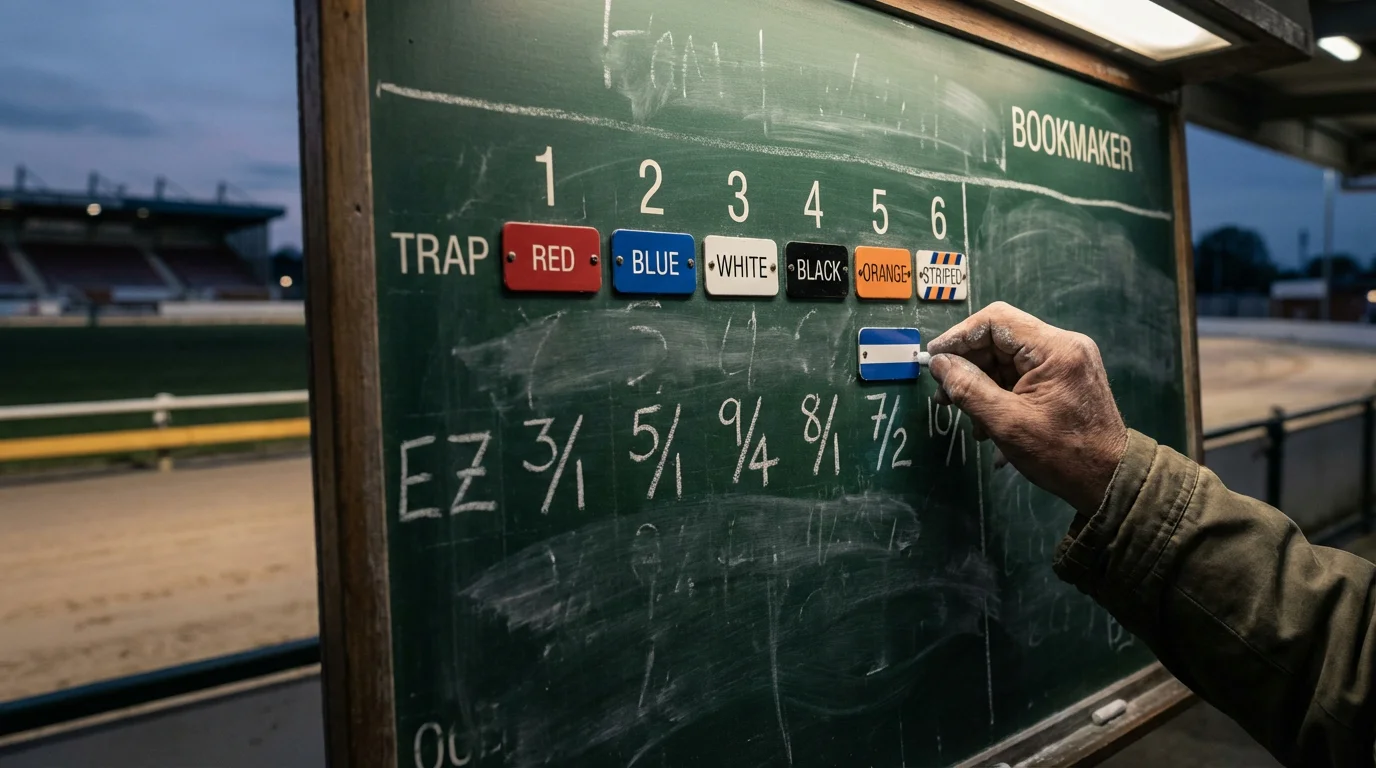
Greyhound Odds Move Fast — Here’s How to Move With Them
In horse racing, odds are established hours before the off. Ante-post markets open days in advance, morning prices appear at breakfast, and by the time the field reaches the starting gate the market has absorbed thousands of opinions and settled into something resembling consensus. Greyhound racing works on a different clock entirely. Prices typically appear around ten to fifteen minutes before a race — sometimes later — and in that narrow window they can shift dramatically. A dog that opens at 5/1 might be backed down to 3/1 within minutes, or drift to 8/1 if the money flows elsewhere. Find more odds guides at greyhoundbettingsitesuk.
This volatility isn’t a flaw in the market. It’s a structural feature of greyhound betting. The pools are thinner than in horse racing, with fewer bettors involved and less public form analysis driving the prices. Small amounts of informed money can move a market significantly, and the compressed timeframe means those movements happen fast. For a punter who understands how greyhound odds form, move and settle, this creates genuine opportunity. For one who doesn’t, it creates confusion and costly timing errors.
This guide breaks down the mechanics of greyhound odds from the ground up: how formats work, what starting price actually means, why best odds guaranteed is non-negotiable, and where to find value in a market that most casual bettors never properly examine. Ten minutes before the off, the market is still making up its mind. You shouldn’t be.
Odds Formats — Fractional, Decimal and What They Mean
UK greyhound racing defaults to fractional odds, and most trackside and online bookmakers display them that way. The format is intuitive once you grasp the core logic: the number on the left is your profit, the number on the right is your stake. At 5/1, you profit five pounds for every one pound staked. At 11/4, you profit eleven pounds for every four staked — or two pounds seventy-five pence per pound. Your total return is always the profit plus the original stake, so 5/1 returns six pounds per pound bet.
Decimal odds express the same information differently. Instead of separating profit and stake, they give you the total return multiplied by your stake. The 5/1 in fractional becomes 6.00 in decimal. The 11/4 becomes 3.75. To convert fractional to decimal, divide the left number by the right and add one. To go the other way, subtract one from the decimal and express the result as a fraction.
Fractional odds are tradition. Decimal odds are arithmetic. Learn both. For single bets, the format barely matters — choose whichever you find easier to read at a glance. Where it makes a practical difference is in multi-leg bets. If you’re building an accumulator, multiplying decimal odds together gives you the combined return in one step (2.50 times 3.00 times 4.00 equals 30.00, meaning a one-pound stake returns thirty pounds). Doing the same with fractional odds requires converting each to decimal first, or working through a chain of fractions that becomes unwieldy after three legs.
Most bookmaker sites and apps let you toggle between formats in your settings. For reference, here are the most common greyhound odds you’ll encounter and their equivalents across both systems:
| Fractional | Decimal | Profit per £1 Stake | Implied Probability |
|---|---|---|---|
| 1/1 (Evens) | 2.00 | £1.00 | 50.0% |
| 2/1 | 3.00 | £2.00 | 33.3% |
| 3/1 | 4.00 | £3.00 | 25.0% |
| 4/1 | 5.00 | £4.00 | 20.0% |
| 5/1 | 6.00 | £5.00 | 16.7% |
| 6/1 | 7.00 | £6.00 | 14.3% |
| 8/1 | 9.00 | £8.00 | 11.1% |
| 10/1 | 11.00 | £10.00 | 9.1% |
| 11/4 | 3.75 | £2.75 | 26.7% |
| 5/2 | 3.50 | £2.50 | 28.6% |
| 7/2 | 4.50 | £3.50 | 22.2% |
| 9/2 | 5.50 | £4.50 | 18.2% |
The implied probability column is worth paying attention to. It tells you what chance the odds suggest a dog has of winning, before the bookmaker’s margin is applied. We’ll come back to implied probability later, because understanding it is the foundation of finding value.
Starting Price — The Final Word on Greyhound Odds
How Starting Price Is Determined
Starting price is a snapshot of the market’s final opinion — taken at the last possible second. In UK greyhound racing, the SP is determined by the official returned price at the moment the traps open. For races at GBGB-regulated tracks, this is based on the prices offered by on-course bookmakers in the final moments before the off. In practice, because many greyhound meetings now operate without a full ring of on-course bookmakers, starting prices are increasingly derived from aggregated industry pricing mechanisms that reflect the weight of money in the market.
What matters for you as a bettor is this: the SP is the default price your bet is settled at if you haven’t locked in a fixed early price. If you place a bet and select “SP” on your betslip, the bookmaker will pay you at whatever the starting price turns out to be — and you won’t know that number until the race goes off. In greyhound racing, where prices can shift sharply in the final minutes, this introduces a meaningful element of uncertainty. A dog you fancied at 5/1 when you placed the bet might go off at 3/1 if it attracts late support, or drift to 7/1 if the money goes elsewhere. The SP is what you get, for better or worse.
This volatility is more pronounced in greyhound racing than in horse racing. Horse racing markets have deeper liquidity and longer price formation periods, which tend to dampen late swings. Greyhound markets are thinner, form earlier, and react more violently to relatively small amounts of money. A single informed punt of a few hundred pounds can move a greyhound’s SP by two or three points — a shift that would barely register in a competitive horse racing market.
SP vs Early Price — When to Take Which
Early prices on greyhound races typically become available around ten to fifteen minutes before the off, though this varies by bookmaker and meeting. Taking an early price locks in your odds at the moment you place the bet. If the dog’s price subsequently shortens, you’ve secured better value than you’d have got at SP. If it drifts, you’ve locked yourself into a worse deal.
The dilemma is real, and it plays out hundreds of times a day across UK greyhound meetings. You see a dog you like at 5/1. Do you take the price now, or wait and hope it drifts to 6/1 or 7/1? If you wait and it shortens to 3/1, you’ve cost yourself value. If you take it and the SP turns out to be 8/1, you’ve left money on the table.
The tactical answer is best odds guaranteed, and it resolves the dilemma almost entirely. With BOG, you take the early price and the bookmaker guarantees that if the SP is higher, you’ll be paid at the better number. You get the certainty of a fixed price with the upside potential of a drifting SP. If you have access to BOG — and you should — the optimal strategy is nearly always to take the early price. You’re guaranteed at least that number, and potentially more. The only scenario where waiting makes sense is if you believe the price will shorten and you want to lay off part of your position on an exchange — but that’s a strategy for experienced bettors, not a default approach.
Best Odds Guaranteed — The Essential Greyhound Betting Feature
How BOG Works in Practice
BOG removes the guesswork from the biggest decision in greyhound betting: when to take your price. The mechanism is simple. You place a bet at the early price — say 4/1. The race goes off, and the SP is returned at 6/1. With best odds guaranteed, the bookmaker pays you at 6/1, the higher of the two prices. If the SP had come in at 3/1 instead, you’d still be paid at your original 4/1. You always get the better number.
Most bookmakers apply BOG to win and each way singles only. It typically doesn’t cover accumulators, forecast or tricast bets, or virtual racing. There are usually time conditions too: bets must be placed after a certain time on the day of the race, often from 08:00 or 09:00, to qualify. Bets placed the night before, or ante-post bets placed weeks in advance, are generally excluded. These conditions vary by bookmaker, so checking the specific BOG terms for your chosen bookie before relying on the feature is a step worth taking.
In practical terms, BOG transforms the economics of greyhound betting. Without it, every early price bet carries the risk of missing a better SP. With it, you’re structurally protected. Over a season of betting — hundreds of races — the cumulative value of BOG payouts at SP when it exceeds your taken price adds up to a meaningful edge. It’s not a promotion or a gimmick. It’s a fundamental feature that should influence your choice of bookmaker.
Which Bookmakers Offer BOG on Greyhounds
The major UK bookmakers that offer best odds guaranteed on greyhound racing include bet365, Betfred, Coral, Ladbrokes and William Hill. All five apply BOG to UK greyhound races, but the terms differ in ways that matter.
Ladbrokes has one of the more generous BOG policies for greyhounds, applying it to all UK greyhound races from 08:00 on race day, covering both win and each way singles. bet365 offers BOG on UK and Irish greyhound races, which extends the coverage beyond the domestic market. Betfred includes BOG as part of its broader greyhound product, though the specific terms around qualifying times and markets should be checked against their current promotions page. Coral applies BOG to UK races with standard conditions. William Hill similarly covers UK greyhound meetings with BOG, though exclusions may apply to certain minor fixtures.
The key point isn’t which bookmaker has the most generous BOG — terms shift, and specific conditions can change between seasons. The key point is that BOG is more important for greyhound betting than for virtually any other sport. The short price-formation window, the thin markets, and the sharp late movements mean that the gap between early price and SP is frequently significant. In horse racing, BOG is a nice bonus. In greyhound racing, it’s structural protection that no serious bettor should voluntarily give up. If your bookmaker doesn’t offer BOG on greyhounds, that alone is reason enough to consider switching.
Finding Value in Greyhound Racing Markets
What Value Means in a Six-Dog Field
Value isn’t about finding big-priced winners — it’s about finding wrong prices. Every set of odds implies a probability. A dog at 3/1 implies a twenty-five percent chance of winning (one divided by four, the decimal equivalent). A dog at evens implies fifty percent. The bookmaker’s odds represent their assessment of each dog’s chance, adjusted to include a margin — the overround — that ensures profit across the full market regardless of the outcome.
Value exists when the implied probability embedded in the odds is lower than the actual probability of the outcome occurring. If a dog is priced at 3/1 (implying a twenty-five percent chance) but your analysis tells you it has closer to a thirty-three percent chance, the bet has positive expected value. Over a large number of such bets, you come out ahead — not because every bet wins, but because the prices you’re taking consistently overestimate the difficulty of the outcome.
Greyhound racing’s six-dog fields create a particular dynamic for value hunting. Smaller fields mean less overround than you’d typically see in larger horse racing markets. A six-runner greyhound race might have a total implied probability across all dogs of around 115-120%, compared to 130-140% for a competitive twelve-runner handicap. The lower the overround, the closer the bookmaker’s odds are to the true probabilities, which means the market is tighter and value opportunities, while narrower, are more precisely identifiable by anyone with good form analysis.
Where Greyhound Odds Offer the Most Value
Graded races are the most fertile ground for value betting. The grading system produces races where all six dogs have similar measured ability over the distance, which makes the form more directly comparable and the true probabilities more assessable. In an A4 race where all six dogs have run within a few lengths of each other at the same track and distance, you’re working with hard data. Your analysis can identify the dog whose recent form, trap draw and running style give it a genuine edge — and the odds might not fully reflect that edge, particularly if the market has been shaped by name recognition or recent results without context.
Open races — the higher-profile events that sit above the grading system — offer a different kind of value. The fields attract dogs from multiple tracks, which means there’s more public form data available but also more uncertainty in how dogs from different circuits compare. The markets for open races are deeper and more closely analysed, but the cross-track element introduces enough noise that a careful form student can identify pricing inefficiencies, particularly when a dog has strong track-specific form that the broader market hasn’t weighted appropriately.
Early-priced outsiders with positive track form deserve particular attention. In greyhound racing, the market’s pricing of outsiders is often less precise than its pricing of favourites, simply because fewer people analyse the full six-dog field. A dog at 6/1 or 8/1 that has a strong record at the track, suits the trap draw, and benefits from expected conditions can represent significant value — especially if the favourite has been priced too short based on recent wins without considering the specific setup of this race. Trap bias in specific weather conditions is another underexploited angle: a persistent inside-trap advantage on a wet evening at a tight track is the kind of data point that most casual bettors ignore and that the market only partially prices in.
Why Greyhound Odds Change — And What the Movements Tell You
When a greyhound’s price halves in two minutes, somebody knows something. That’s the blunt reality of market movements in a sport where inside information — a strong recent trial, a trainer’s private assessment of a dog’s fitness, early track conditions that favour a particular runner — travels fast within a small community. The betting pools on an individual greyhound race are modest compared to horse racing or football, which means that relatively small amounts of money can produce dramatic price swings.
A shortening price — a dog moving from 5/1 to 3/1, for example — signals that money is coming in for that selection. In greyhound racing, late money is particularly significant. Unlike horse racing, where morning support might reflect newspaper tipsters and public opinion, greyhound market moves in the final five minutes before a race often reflect genuinely informed positions. Trainer connections, kennel hands, and regular trackgoers who’ve watched trial sessions are a small but influential group whose bets carry more weight per pound than the casual public’s. When a dog’s price shortens sharply in the last few minutes, the market is telling you that someone with information considers it a strong chance.
A drifting price — moving from 3/1 to 5/1 or beyond — tells the opposite story. The market’s confidence in that dog is fading. Perhaps the expected support hasn’t materialised, or money has shifted to a rival runner after late information about conditions or fitness. A drift doesn’t mean a dog can’t win — plenty of race-day drifters oblige — but it’s a data point that your analysis should acknowledge rather than dismiss.
Monitoring these movements is straightforward. Oddschecker provides real-time odds comparison across bookmakers, showing price movements and highlighting significant movers. Betting exchange prices — Betfair in particular — offer an unfiltered view of where money is going, since exchange odds are set purely by market participants without a bookmaker’s margin. Bookmakers’ own early show prices, available in the ten-to-fifteen-minute window before each race, give you the initial market position against which subsequent movements can be measured. The discipline of checking odds movement before confirming a bet takes seconds and can materially affect the value of the prices you take.
Exchange Odds vs Fixed Odds for Greyhound Betting
Exchange odds look better on paper — but paper doesn’t tell you about liquidity. Betting exchanges like Betfair operate without a traditional bookmaker margin: instead, users bet against each other, and the exchange takes a commission on winning bets (typically five percent). Because there’s no built-in overround, the odds on offer are often higher than those at fixed-odds bookmakers. A dog priced at 4/1 with a traditional bookie might be available at 9/2 or 5/1 on the exchange. Over time, that difference adds up.
The problem for greyhound bettors is liquidity. Horse racing exchange markets are deep — major races attract tens of thousands of pounds in matched bets, and you can get a meaningful stake on at the displayed price. Greyhound exchange markets are shallow by comparison. On a typical BAGS afternoon meeting, the total matched volume on a single race might sit in the low hundreds of pounds. That means the price you see might only be available for a small stake, and trying to place a larger bet could either go unmatched or shift the market against you. For day-to-day graded racing at mid-tier tracks, the practical reality is that exchange liquidity is often too thin to rely on.
Where exchanges do offer genuine utility for greyhound bettors is in major open races — the English Greyhound Derby, the St Leger, the Oaks — where public interest and betting volume are higher. These events attract enough liquidity for exchange prices to be meaningful, and the odds are typically better than fixed-odds alternatives. Exchanges also offer lay betting: the ability to bet against a dog, profiting when it loses. For greyhound racing, where identifying likely losers can sometimes be easier than picking winners, lay betting at short prices is a legitimate strategic tool. A dog with poor recent form, drawn in an unfavourable trap, priced at 2/1 by the fixed-odds market — laying that at 2.5 on the exchange is a structured way to profit from a negative assessment.
The practical recommendation for most greyhound punters is a hybrid approach. Use fixed-odds bookmakers with BOG for daily racing, where the combination of locked-in prices and SP protection provides the best structural deal. Use the exchange selectively for major races where liquidity supports meaningful bets at better prices, and for lay betting on specific selections where your analysis strongly suggests a dog is overpriced by the market. Holding accounts with both a traditional bookmaker and an exchange gives you the flexibility to take the best available option on a race-by-race basis.
The Price Was Right — Betting With the Odds on Your Side
Most greyhound punters bet without checking SP trends. They don’t use BOG. They don’t think about implied probability or overround or where the late money is going. They see a dog they like, take whatever price is on screen, and hope for the best. That approach can produce the occasional winner, but it will not produce a long-term edge — and in a sport where margins are thin and races are decided in half a minute, the price you take is the one variable you fully control.
Odds mastery isn’t glamorous. Nobody celebrates a punter who consistently takes early prices with BOG and tracks market movements before confirming bets. But it’s the single biggest structural advantage available to someone who bets on greyhound racing regularly. The punter who understands that a 3/1 shot implies a twenty-five percent chance and compares that against their own assessment of the race is operating on a fundamentally different level from the one who just backs the dog with the best recent form figure.
The three practices that separate informed greyhound bettors from the crowd are straightforward. First, always bet with a bookmaker that offers BOG on greyhounds — it eliminates the timing risk on every single bet. Second, understand implied probability well enough to recognise when a price overstates or understates a dog’s actual chance, even roughly. You don’t need a spreadsheet; you need the habit of asking “is this dog really a twenty-five percent chance, or is it closer to thirty?” Third, monitor odds movements. When a price shortens sharply in the final minutes, register it. When a dog drifts from favourite to third in the market, register that too. These movements aren’t noise — they’re information, and in greyhound racing’s thin markets, they’re unusually reliable information. Also read our starting price in greyhound racing.
In thirty seconds of racing, the one thing you controlled was the price. Everything else — the trap break, the first bend, the dog’s fitness, the track conditions — was decided before you placed your bet. The price is your contribution to the equation, and getting it right more often than you get it wrong is the closest thing to a strategy that greyhound racing allows.
