
Greyhound vs Horse Racing Betting — Key Differences Explained
 Available in US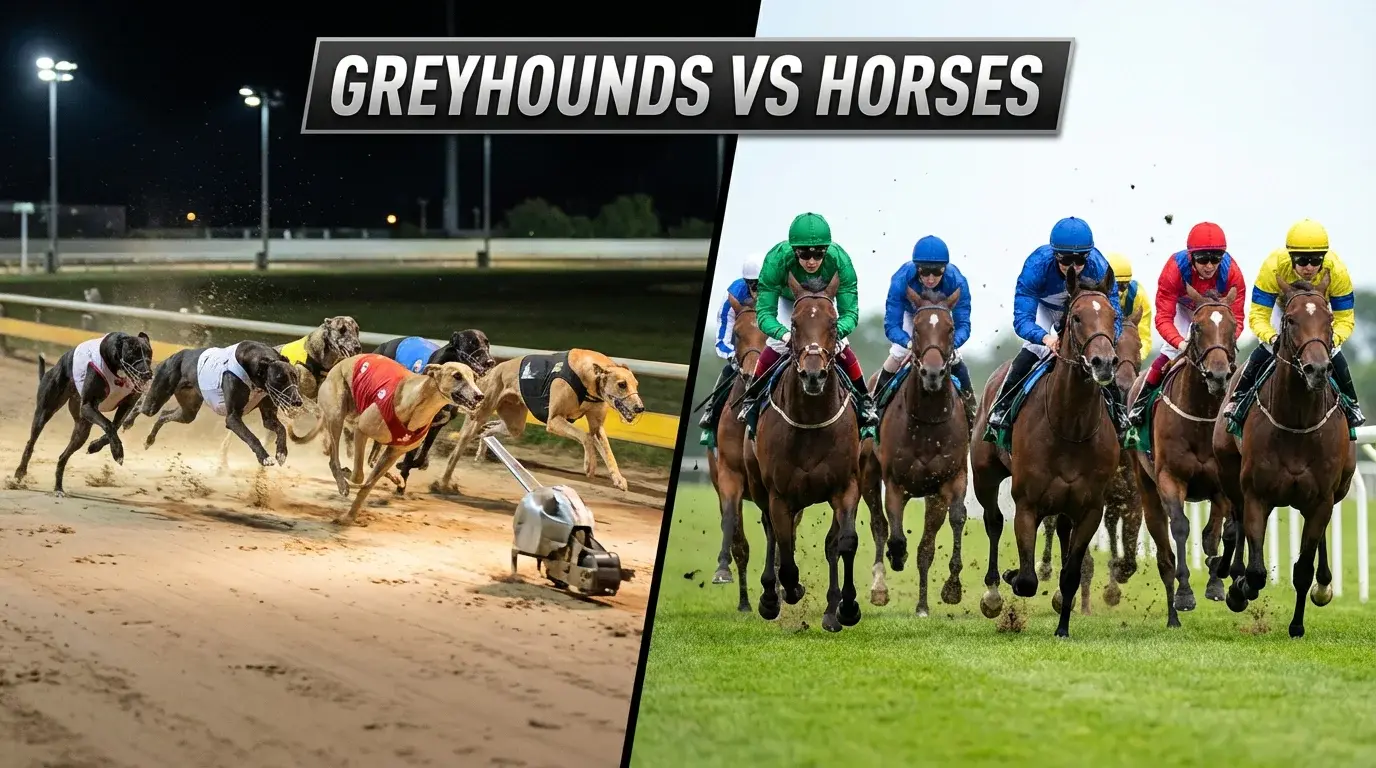
Same Principle, Different Sport Entirely
Both involve animals racing around a track while bookmakers take bets and punters stare at screens willing their selection home. Beyond that structural similarity, greyhound racing and horse racing are different betting propositions in almost every meaningful way. The field sizes differ. The odds behave differently. The form cycles operate on different timescales. The place terms change. And the strategic approach that works for one will actively mislead you in the other. Find more betting guides at greyhoundbettingsitesuk.
If you have come to greyhound betting from a horse racing background, some of your instincts will serve you well. Others will cost you money until you recalibrate. This comparison covers the key differences that affect your betting decisions, from market structure to strategy, and explains why the crossover is less seamless than most punters assume.
Field Size, Odds Behaviour and Form Cycles
The most fundamental difference is field size. A standard UK greyhound race has six runners. Horse racing fields range from five or six in small-field events to twenty or more in handicaps and festival races. This distinction cascades through every aspect of the betting experience. Six-dog fields produce lower overrounds, which means bookmaker margins are thinner and the odds are generally closer to true probability than in a twenty-runner horse race. That sounds like an advantage for punters, and it is — but it also means that finding mispriced dogs is harder, because the market has fewer places to hide its errors.
Odds behaviour differs markedly. Horse racing markets typically form hours or even days before the race, with early prices available the morning of the event and substantial money entering the market throughout the day. Greyhound odds form late. Early prices might appear ten to fifteen minutes before the off, and the market can shift dramatically in the final few minutes as late money arrives. This volatility makes Best Odds Guaranteed significantly more important in greyhound racing than in horse racing, where prices tend to settle earlier and move less aggressively.
Form cycles are shorter in greyhound racing. A horse might run once every two to four weeks, with a form record spanning months or years. A greyhound can race two or three times per week, and its form over six runs might cover just a fortnight. This compressed cycle means that recent form is more predictive but also more perishable — a dog in great form today could be over-raced and fading by next week. In horse racing, you have the luxury of assessing longer trends. In greyhound racing, you are working with a snapshot that changes rapidly.
Place Terms, BOG and Streaming Differences
Each-way place terms in greyhound racing are standardised because field sizes are consistent. In a six-dog race, the standard place terms are 1/4 odds for two places. Horse racing place terms vary by field size and race type: 1/5 odds for three places in races with eight or more runners, different terms for handicaps with sixteen or more. This variability in horse racing creates opportunities and traps for each-way bettors that simply do not exist in greyhound racing, where you always know the terms before you look at the odds.
Best Odds Guaranteed operates on the same principle in both sports, but its practical importance is greater for greyhound racing. Horse racing markets are deep and well-traded, with prices moving incrementally as information flows in. Greyhound markets are thinner and more volatile. A horse that opens at 5/1 in the morning might drift to 6/1 or shorten to 4/1 by the off. A greyhound that opens at 5/1 might be 3/1 or 8/1 by the time the traps open. BOG protects you against this volatility, and any greyhound bettor who does not use it is accepting unnecessary risk.
Live streaming covers both sports through the same bookmaker platforms, but the viewing experience differs. Horse racing broadcast production is more polished, with camera angles, commentary, and pre-race analysis. Greyhound streams are functional — a single camera tracking the race from a fixed position, usually without commentary. The stream serves the purpose of letting you watch the race in real time, but it does not provide the analytical layer that horse racing broadcasts offer. Your pre-race analysis in greyhound racing happens before you press play, using the racecard rather than the broadcast.
Strategy Adjustments Between the Two Sports
The biggest strategic adjustment for a horse racing bettor moving to greyhounds is the importance of the trap draw. In horse racing, the draw matters in certain flat races at specific courses, but it is one variable among many — the jockey, the trainer, the going, the pace of the race, the weight carried. In greyhound racing, the trap draw is often the single most influential factor. A railer in trap one on a track with a tight first bend has a structural advantage that no amount of raw speed from trap six can reliably overcome. Understanding trap bias at individual tracks is a core skill for greyhound bettors, and it has no direct equivalent in horse racing strategy.
Jockeys do not exist in greyhound racing, which removes an entire dimension of analysis. In horse racing, jockey selection, riding style, and tactical decisions during the race all influence the outcome. In greyhound racing, the dog runs on instinct and conditioning. What the trainer has done in the days before the race — feeding, exercise, track familiarity — matters more than any in-race decision. This makes greyhound betting more predictable in some ways and less predictable in others. There is no jockey to rescue a bad position, but there is also no jockey to make a tactical error.
Bankroll management requires adjustment for the pace of greyhound racing. Horse racing meetings run five to eight races over three to four hours. A greyhound meeting packs twelve races into a similar timeframe, and if you are following multiple meetings, the opportunities to bet multiply rapidly. The discipline that works for horse racing — one or two bets per meeting, researched and deliberate — needs to be maintained even when the opportunities come twice as fast.
Two Sports, One Betting Account — Making the Transition Work
Horse racing and greyhound racing complement each other in a betting portfolio. The schedules overlap minimally — greyhound BAGS meetings fill the daytime gaps between horse racing cards, and evening dog racing runs after the horses have finished. The analytical skills transfer: reading form, assessing conditions, identifying value in a market. What does not transfer is the specific knowledge — trap draw, grading systems, six-dog field dynamics — that greyhound racing demands. Also read our how to bet on greyhound racing.
The punters who do best across both sports are the ones who respect the differences rather than assuming their horse racing edge automatically applies. Spend time learning greyhound-specific patterns before committing serious stakes. Use BOG. Study trap bias. Accept that the form cycle is faster, the markets are thinner, and the races are over before you have finished saying the dog’s name. That is not a limitation. It is the appeal.
